
Human-AI Interaction in the Future: From Tool to Gateway
Evolution from PC Internet to Mobile Internet
In the early days of the PC internet era, users primarily relied on web browsers to access various services. The internet was open, websites could link to each other, and users had greater freedom. Later, with the rise of mobile internet, manufacturers launched their own apps, creating closed ecosystems where users were segmented across different platforms.
As competition intensified, apps evolved into "super apps," trying to incorporate as many features as possible, such as short videos, news feeds, search, payments, and even mini-programs, to keep users engaged for longer periods. While this model increased platform stickiness, it also led to bloat and redundancy, making the user experience increasingly inefficient.
The advent of WeChat mini-programs partially alleviated this issue by allowing users to perform various tasks like shopping, ordering food, and handling business within WeChat without needing to download multiple apps. This model is reminiscent of the early PC internet's browser—one gateway connecting multiple services.
AI Gateway: The Next Step Beyond Super Apps
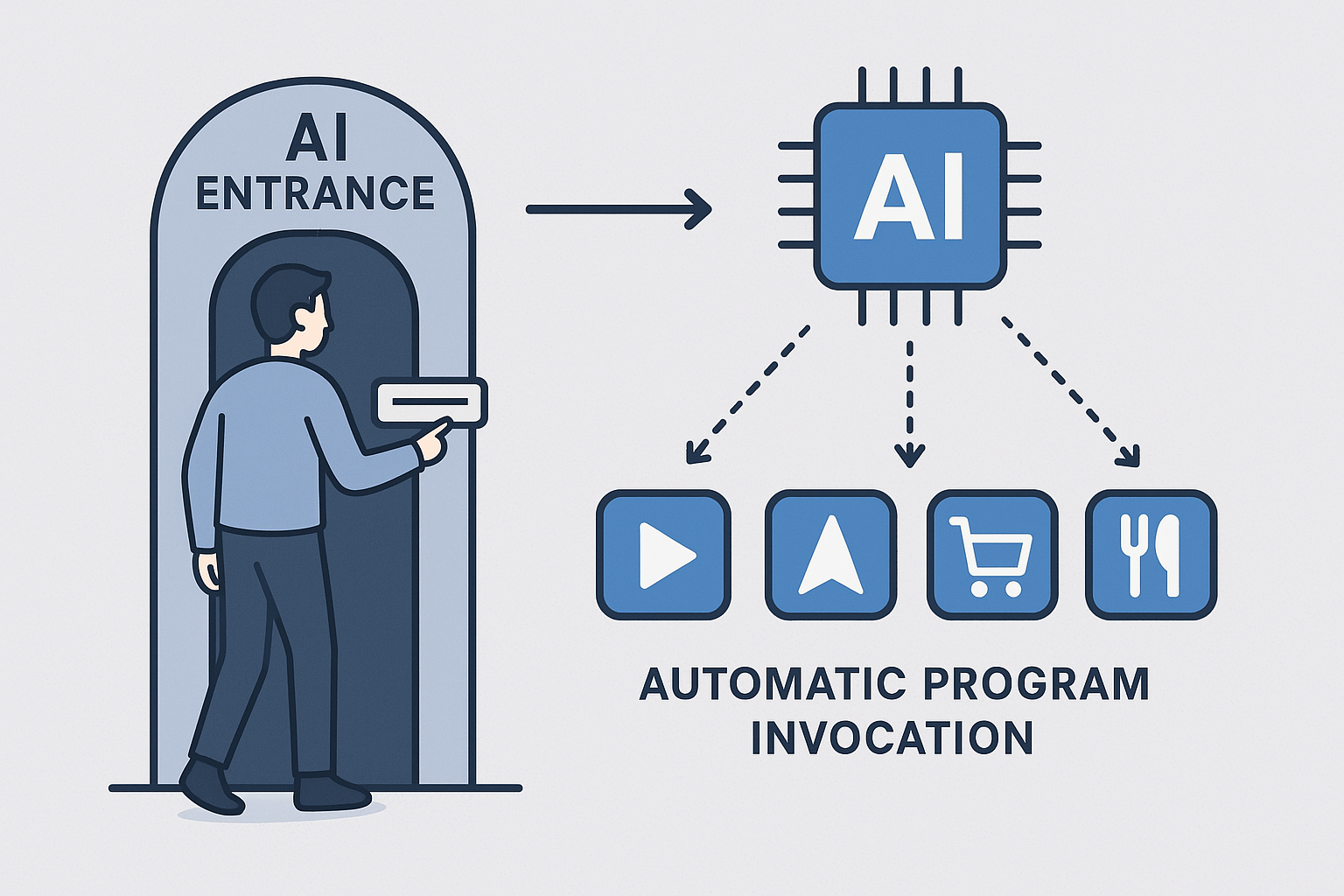
In the future, AI will become the true "super gateway." Users will no longer need to download apps or jump between different platforms; instead, they will simply make requests to AI, which will automatically call various services to complete tasks. For example:
- Booking flights, hotels, and car rentals → Just tell the AI your itinerary, and it will arrange everything.
- Shopping → Describe your needs, and AI will compare prices, place orders, and arrange deliveries.
- Handling documents → Let AI generate reports, translate documents, and edit content.
The core advantages of the AI gateway include:
- Seamless invocation: Users don’t need to know which apps or services AI is using, focusing only on the final result.
- Cross-platform integration: No longer limited to a single app's closed system, AI can access the best resources.
- Automated execution: From information retrieval to task execution, AI completes tasks directly instead of merely providing suggestions.
The Underlying Logic for AI to Achieve These Functions
For the AI gateway to truly work, the core mechanisms behind it need collaboration across various parties. Major companies are actively working on AI ecosystems, such as Apple Intelligence and Samsung's AI solutions, aiming to deeply integrate AI into operating systems so users can perform various tasks without needing to install additional apps.
The underlying logic to achieve this includes:
- AI as part of the operating system: Future phones and computers will have AI built-in. For example, Apple Intelligence will be integrated into iOS and macOS, and users can simply tell Siri their needs, and AI will automatically complete them.
- Collaboration between service providers and AI gateways: Major platforms (e-commerce, transportation, finance, etc.) will open APIs to integrate with AI gateways. For instance, if a user says, "Book a flight to Shanghai for tomorrow," AI will call various airlines or OTA platforms (like Ctrip or Fliggy) to filter the best options and place the order.
- AI as an agent system: The AI gateway will not just be an information intermediary but an intelligent agent. Based on user habits and historical data, it will automatically make optimal decisions rather than just listing options.
- Privacy protection and data security: User data will be encrypted, and AI will only access necessary information based on permissions. It will not upload user data to the cloud but will perform computations locally to protect privacy.
Conclusion
The evolution of the internet has moved from open to closed systems, and AI may bring about a new wave of openness. In the future, the AI gateway will completely transform how humans interact with technology, liberating users from cumbersome tool operations and refocusing on their core needs. This not only improves efficiency but also reshapes the architecture of the internet. As companies like Apple, Samsung, and other tech giants gradually perfect their AI ecosystems, people may soon experience a seamless, intelligent AI era.

Joomaen
"Closed Mind" is a personal blog focused on artificial intelligence, tech tinkering, and the blogger’s personal thoughts. It shares unique insights on AI development, browsers, and technical practices, making it ideal for readers interested in technology and future trends.


